


Soda Blasting: What Makes It the Safer Choice for Commercial Surface Cleaning?
Soda Blasting · Commercial Surface Cleaning
When you clean a surface it does not mean to damage it permanently.
Sodium bicarbonate, compressed air and a gentler way to remove paint, grease and graffiti.
Table of Contents
Commercial surfaces, from machinery and vehicles to brickwork, timber and taking a beating over time. Paint peels, grease build ups and smoke stains spread a lot and in such situations aggressive cleaning methods might not work properly. So the right situation in this case would be to choose “Soda Blasting”. This can offer a gentler alternative. It uses sodium bicarbonate, a soft and water soluble blasting medium that is propelled by compressed air to lift the paint and grime. This solution is suitable as cleaner assets, less surface damage and fewer unexpected restoration costs.
So what actually happens when baking soda meets a painted, greasy or stained surface? Below is the guide that will answer this question for you and give you how soda blasting works.
Key Takeaways
What is soda blasting and how does it work?
Quick answer
Soda blasting is a surface cleaning method that uses sodium bicarbonate particles propelled by compressed air to remove the paint and grime.
Soda blasting works break apart on impact, releasing energy that lift contaminants from the surface while helping preserve the material underneath.
How the process works:
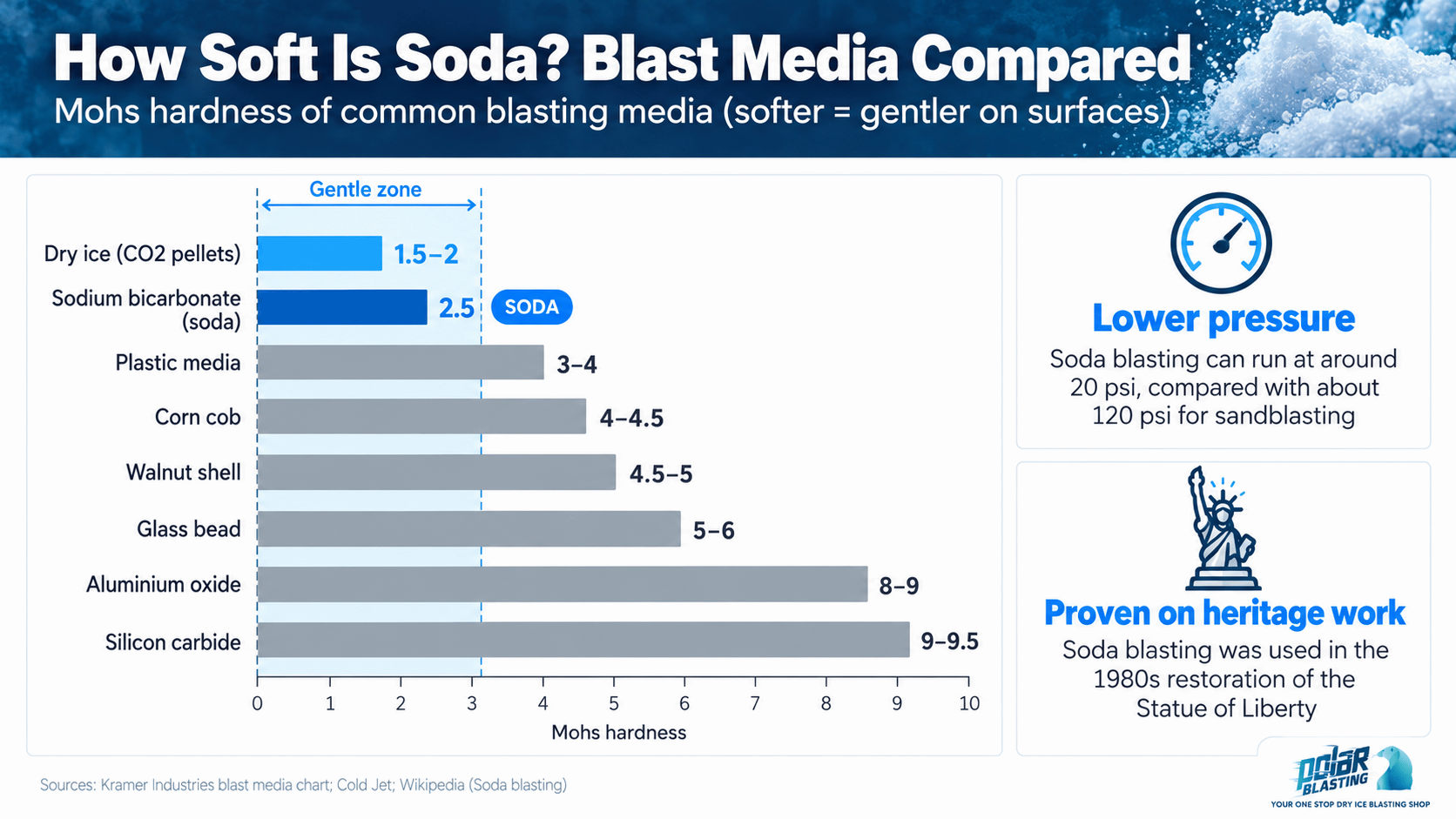
This combination often makes the soda blasting more suitable as conventional abrasiveness can easily damage including aluminium and brick. The medium is water soluble, residue can be rinsed away after blasting. Results depend on the coating, the substrate and the operator’s expertise. So understanding how it works is only half the picture. The real question for most businesses is which surfaces can safely benefit from it.
What surfaces can soda blasting safely clean?
Quick answer
Soda blasting can safely clean a wide range of commercial surfaces including metal, aluminum and glass.
This happens because sodium bicarbonate is soft and non aggressive, this removes paint, grease, smoke without significantly altering the material beneath provided the pressure and the technique suiting the surface.
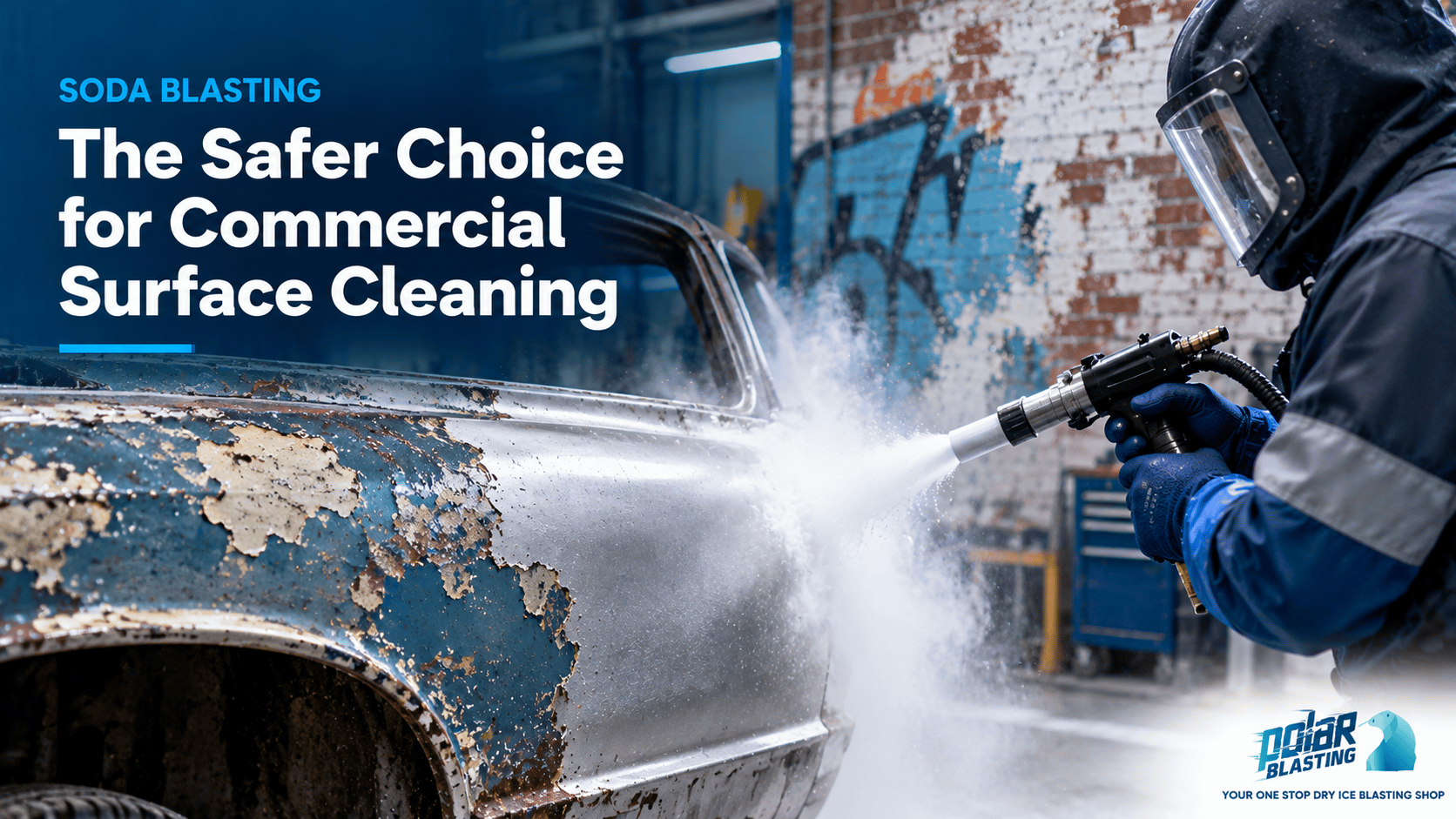
When you choose businesses with mixed assets, versatility is quite a major advantage. On vehicles and fleet equipment, soda blasting can strip down paint and grease from panels and engine components without wrapping thin metal or damaging chrome and rubber seals. Here is how soda blasting applies across common commercial surfaces:
| Surface | How soda blasting helps |
|---|---|
| Vehicle and fleet equipment | Strips paint and grease can be cleaned with wrapping thin panels or damaging chrome and rubber seals. |
| Marine hulls | Removing antifouling and old coating while helping protecting |
| Brick, stone and concrete | Clears graffiti, soot and weathering without the pitting harsher methods |
| Timber and fire damaged interiors | Cleans charred surfaces and reduce smoke odours |
| Food and beverage equipment | Removing any sort of residue using a non toxic medium where harsh chemicals are concerned. |
| Glass and aluminium | Cleans delicate surfaces with minimal risk of etching when correctly applied. |
This range makes the soda blasting a practical choice for facility managers, fleet operators and restorations contractors who need one method that adapts to many materials. It can help in reducing the need for multiple cleaning processes and handle limited surface damage that often lead to costly repairs. When you use soda blasting is how it cleanly fits into commercial operations. The water soluble medium can be rinsed away always after cleaning and the gentle action means many components can be treated in the place reducing disassembly helping businesses return different types of assets.
Now that you know the benefits you can have from soda blasting, now it is important for you and your businesses to compare it with dry ice blasting which can be beneficial for you.
Soda blasting vs Dry ice blasting: Which is right for your project?
Quick answer
The right choice depends on what you need to remove and where.
Soda blasting is ideal for stripping down paint, coating, graffiti and smoke damage such as metal, brick and fibreglass. On the other hand dry ice blasting is best for cleaning grease, oil and production residue from industrial equipment especially where no moisture is preferred.
| Factor | Soda Blasting | Dry Ice Blasting |
|---|---|---|
| Blasting medium | Sodium bicarbonate | Solid CO2 pellets |
| Cleaning action | Particles shatter on impact to lift coatings | Impact, thermal shock and sublimation loosen deposits |
| Best for | Paints, coatings and rust staining. | Grease, oil and light buildup |
| After cleaning | Water soluble residue rinses away easily | Medium turns to gas leaving no blast residue |
| Idea surfaces | Metal, aluminum, brick and fiberglass | Production machinery, moulds, electrical components |
| Common industries | Automotive, marine and fire restoration | Manufacturing, food and beverage. |
Both methods share one core strength that is to clean effectively while being far gentler on surfaces than traditional abrasives. The difference lies in what each does best among them. At some instance 3mm dry ice pellets are the size designed specifically for dry ice blasting. These are available from a 10kg minimum with larger quantities by negotiation so facilities can plan regular maintenance without supply gaps. For projects that needs a little more cutting power on tougher deposits, polar blasting often offers dry ice and abrasive mix blasting combining the clean finish of dry ice with surface action.
A smarter approach for better future
Every commercial surface tells a story of wear, weather and hard work. The way you clean it shapes how long it lasts. Soda blasting offers a safer way to remove paint, grease and graffiti. Paired with dry ice blasting for equipment maintenance it gives businesses a flexible, surface friendly approach to keeping assets in top condition. Choosing the right method today means less repairs, less disruption and long lasting result tomorrow.
Surface Restoration
If your surface is due for restoration then book a call now
info@polarblasting.net · Queensland, New South Wales and Victoria
Frequently asked questions
What is soda blasting?
Soda blasting is a surface cleaning method that uses sodium bicarbonate particles propelled by compressed air to remove the paint and grime.
What surfaces can soda blasting safely clean?
Soda blasting can safely clean a wide range of commercial surfaces including metal, aluminum and glass, as well as brick, stone, concrete, timber, marine hulls and food and beverage equipment.
Is soda blasting safer than sandblasting?
Specially graded sodium bicarbonate has a Mohs hardness of around 2.5, which is far softer than sand. Each particle shatters on contact, pushing coatings and contaminants away instead of cutting into the substrate.
Should I choose soda blasting or dry ice blasting?
Soda blasting is ideal for stripping paint, coatings, graffiti and smoke damage from metal, brick and fibreglass. Dry ice blasting is best for cleaning grease, oil and production residue from industrial equipment, especially where no moisture is preferred.