


What Is Dry Ice Blasting and How Does It Clean Industrial Equipment Without Abrasive Residue?
Dry Ice Blasting · Industrial Cleaning
What if cleaning industrial equipment did not mean creating another sort of mess?
Solid CO2 pellets, compressed air and no spent blast media left behind.
Table of Contents
We understand the problem with grease-covered machines: stubborn deposits and production residue can be quite difficult to remove, but the cleaning process can introduce new sorts of challenges. Water may leave unwanted moisture, chemicals can raise handling concerns, and abrasive materials can create additional waste that needs to be cleared away. For industries where equipment cleanliness and maintenance efficiency matter, these extra steps can cost valuable time. Dry ice blasting is what works best in such a situation, using CO2 pellets propelled by compressed air to loosen contaminants without leaving spent blast media behind.
So how does this process work? Well, you can get to know that you have to go through this guide to understand the practical advantages and factors businesses should consider when choosing an industrial cleaning solution.
Key Takeaways
How does dry ice cleaning work?
Quick answer
Dry ice blasting is effective because it removes containment using solid CO2 pellets and compressed air without leaving behind spent blasting media.
The pellets help loosen deposits through impact and thermal shock while rapidly changing from solid to gas. This makes the process useful for cleaning suitable industrial machinery and selected surfaces by adding moisture to create extra work.
Unlike other cleaning methods that rely on conventional abrasive media, dry ice blasting can reduce secondary cleanup while businesses maintain equipment more effectively. However, results depend on containment and the operator’s expertise.
So why does it work? Here is a quick answer for you:
Dry ice blasting contains three mechanisms and one cleaning process.
Below is the table to clear up your doubts:
| Cleaning mechanism | What it does |
|---|---|
| Impact | CO2 pellets strike the surface and help loosen stubborn deposits. |
| Thermal shock | Rapid cooling can make certain contaminants. |
| Sublimation | Solid Co2 turns directly into gas so the blasting medium leaves no residue. |
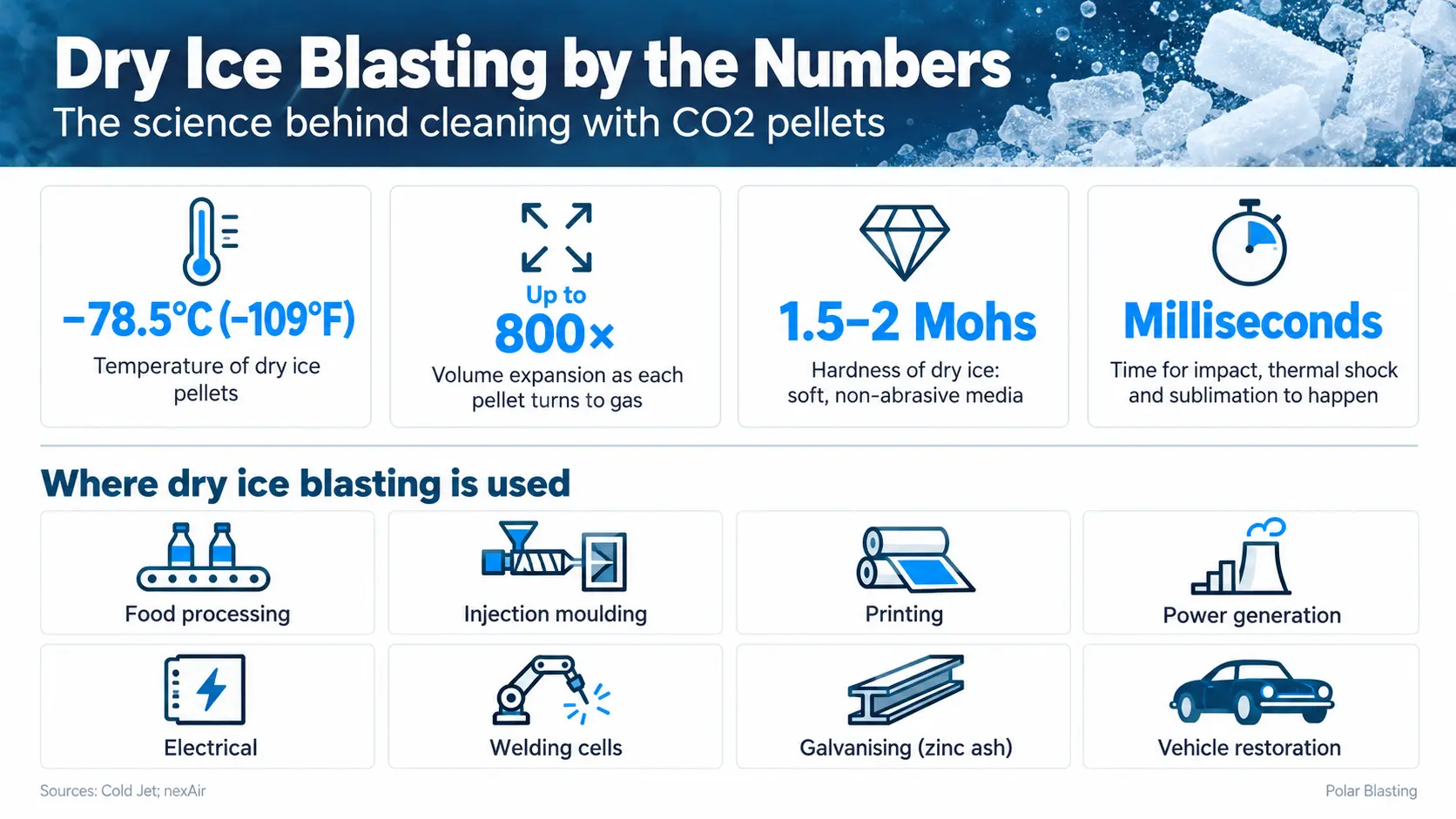
These mechanisms work together to clean suitable surfaces while reducing the need to remove spent blasting media afterwards. According to a global ABB report, 44% of surveyed industry decision-makers reported equipment-related interruptions at least monthly. The survey covered 3600 senior decision-makers across multiple sectors. For businesses considering dry ice blasting, the next step is to assess the equipment and the type of buildup before choosing a cleaning method.
44%
of industry decision-makers reported equipment-related interruptions at least monthly
ABB survey
3,600
senior decision-makers surveyed across multiple sectors
ABB survey
61%
of manufacturers surveyed experienced unplanned downtime in the previous year
Fluke survey
A cleaner approach to industrial maintenance
Quick answer
A cleaner machine can mean less cleanup, but the right cleaning method can also make maintenance easier to manage.
However, grease, production residue and stubborn deposits gradually build up, making the routine maintenance more demanding. The challenge is to remove the contaminants without introducing excess moisture, abrasive waste or additional cleanup. A recent survey has highlighted the fact that 61% of manufacturers surveyed had experienced unplanned downtime in the previous year, highlighting the maintenance challenges.
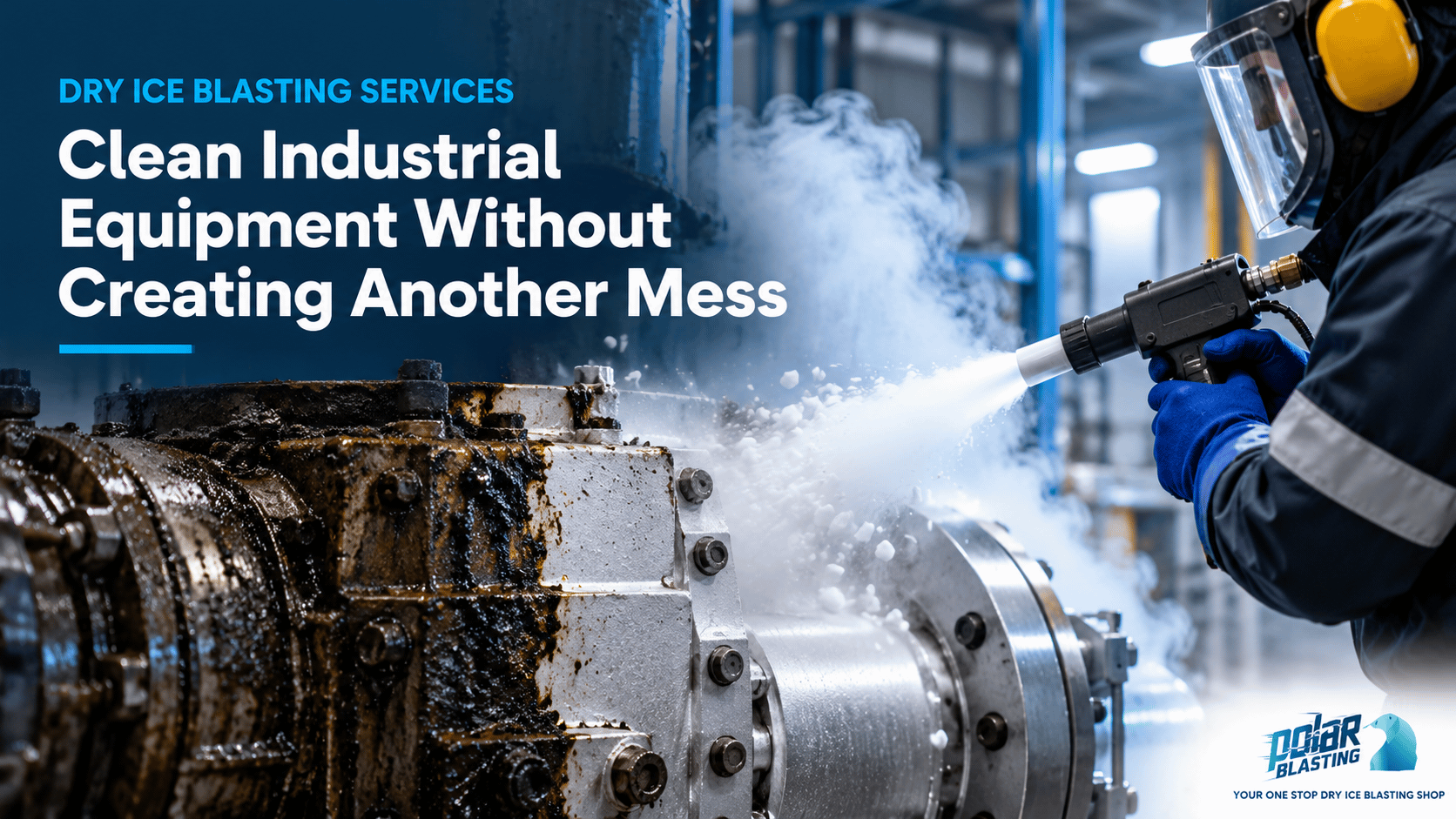
This makes choosing the right cleaning method an important part of equipment care. Dry ice blasting uses solid CO2 pellets and compressed air to loosen contaminants without leaving spent blasting media behind. For suitable machinery, this can reduce the secondary cleanup and help streamline maintenance routines. Here are a few points worth pondering over before you choose your Dry ice blasting services
Ultimately, effective industrial maintenance is about more than removing visible dirt; it is about choosing a cleaning process that suits the equipment and its operating environment. Dry Ice blasting offers a practical solution for businesses seeking to remove stubborn contamination without leaving spent blasting media behind. So before selecting a method, businesses should evaluate their cleaning requirements, safety procedures, and maintenance goals. Dry ice blasting can help simplify equipment cleaning while reducing secondary cleanup and supporting more organised industrial routines.
Wrapping text!!!
Industrial cleaning should solve a problem, instead of creating another one. From stubborn grease to accumulated production residue, choosing the right Dry ice blasting services can make equipment maintenance more manageable. When you use the right services, they can help you take an effective approach for suitable industrial applications by using CO2 pellets to loosen contaminants. This can help in secondary cleanup while supporting cleaner and more effective maintenance routines. When you hire the best cleaning service, you must make sure that you achieve safe and reliable results.
Looking for a smarter way to clean industrial equipment?
Talk to our team about dry ice blasting for your machinery and facility.
info@polarblasting.net · Queensland, New South Wales and Victoria
Frequently asked questions FAQs
What is dry blasting used for?
Dry blasting uses top velocity compressed air to propel dry abrasive media against a surface. The primary use is surface preparation, cleaning and maintenance.
What are the pros of dry ice blasting?
Dry ice blasting uses recycled carbon dioxide pellets to clean surfaces through kinetic energy, thermal shock and sublimation.
How does dry ice blasting remove industrial contaminants without leaving residue?
Dry ice blasting removes industrial contaminants through a combination of kinetic energy, thermal shock and handles rapid gas expansion turing directly from a solid into gas upon impact.